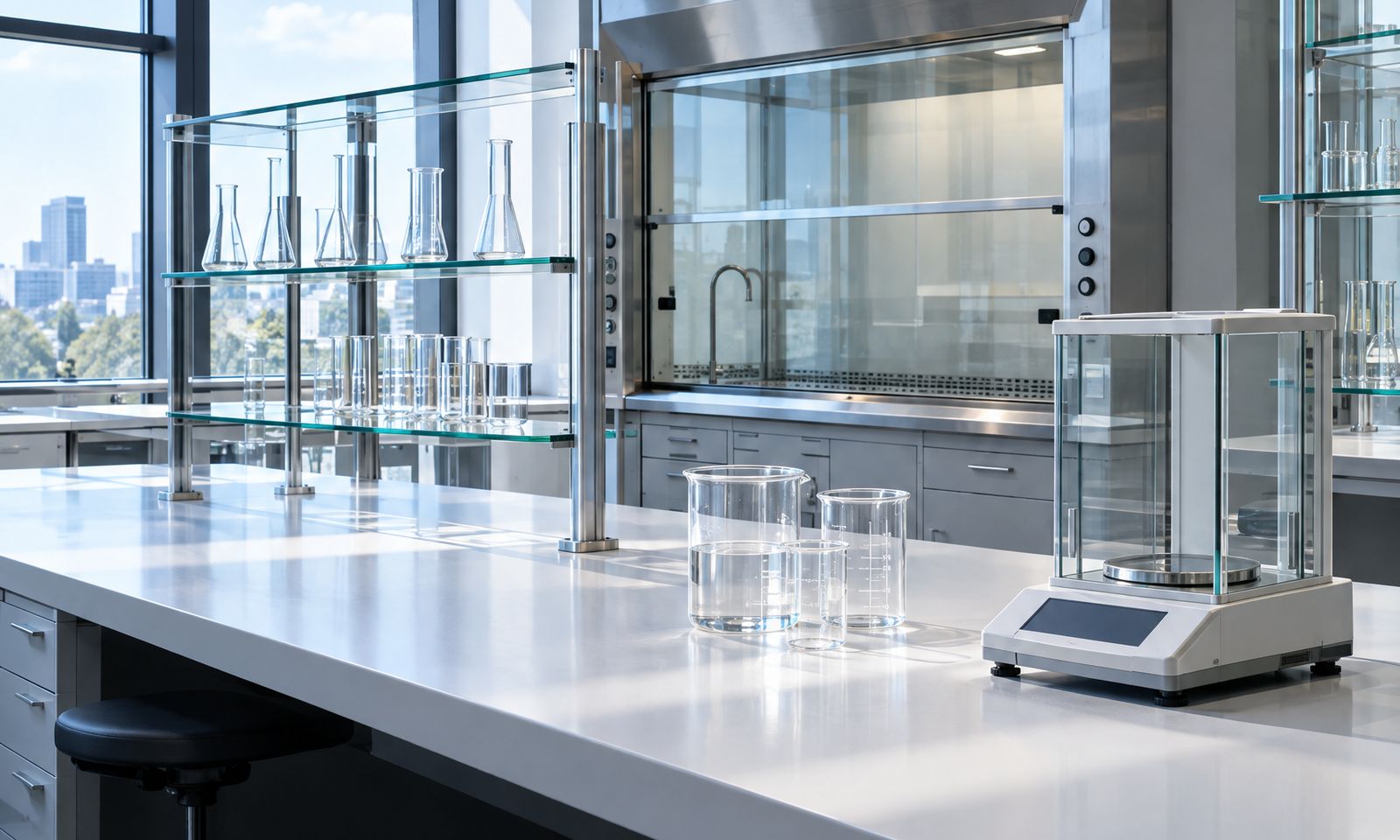
Analytical Vials & Sample Preservation Standards
Sample integrity in chromatographic and spectroscopic analysis depends heavily on the chemical neutrality of containment glass and closure liners.
Glass Classifications & Hydrolytic Resistance
Chromatography and analytical synthesis require containers that do not leach alkali ions into aqueous or organic solutions. Borosilicate Type I glass is the industry benchmark for chemically inert containment.
| Glass Type | Composition | Hydrolytic Resistance | Typical Use |
|---|---|---|---|
| Type I (33 expansion) | Borosilicate (81% SiO2) | Highest (Class 1) | Sensitive peptide & protein solutions |
| Type I (51 expansion) | Borosilicate (72% SiO2) | High (Class 1) | Standard HPLC autosampler vials |
| Type II (Treated) | De-alkalized Soda-Lime | Moderate (Class 2) | Single-use buffer containment |
| Type III | Regular Soda-Lime | Low (Class 3) | Dry non-reactive powders only |
Septa & Closure Integrity
Analytical closures must ensure an airtight hermetic seal while allowing repeated needle punctures without coring. PTFE/silicone composite septa provide an inert fluoropolymer barrier against chemical corrosion, backed by resilient elastomeric silicone for resealability.
Thermal Stability & Cryopreservation
Lyophilized compounds and sensitive analytical aliquots require containment capable of withstanding extreme thermal cycles from ambient down to -80°C without micro-fracturing or seal compromise.
Quality Assurance Notice: All analytical containment glass must conform to ISO 3585 and European Pharmacopoeia section 3.2.1 hydrolytic surface resistance testing.
Technical References
- European Pharmacopoeia 10.0 (2020). Section 3.2.1: Glass containers for pharmaceutical use. EDQM.
- ASTM E438-92 (2021). Standard Specification for Glasses in Laboratory Apparatus. ASTM International.
- United States Pharmacopeia (USP) General Chapter <660> Containers — Glass. USP-NF.